On the Central Coast, the outdoors is half the reason people live here. Yet so many backyards only really get used for about three months of the year, blazing in January and abandoned by June. It doesn’t have to be that way.
With the right design, a deck and outdoor area can work just as well for a frosty winter morning coffee as a summer barbecue. The trick is building in flexibility from the start, so the space adapts to the weather instead of surrendering to it.
This guide walks through how to create outdoor decking Central Coast families can enjoy in every season, from the foundation underfoot to the finishing touches that make it feel like a proper room. We’ve built plenty of these spaces locally, so here’s what actually works.
Start With a Deck That Can Take It
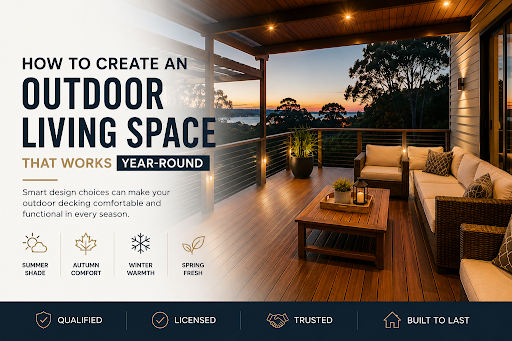
Everything sits on the deck, quite literally, so it’s the first thing to get right. A year-round space needs a floor that handles sun, rain, salt air and constant use without turning into a maintenance burden.
Whether you choose composite for its low upkeep or a premium hardwood for natural warmth, the key near the water is selecting a board built for the conditions and laying it over a solid substructure. Quality outdoor decking Central Coast homeowners can rely on starts with that frame, because even the best boards fail on a weak base.
If you’re torn between materials, weigh up cost, maintenance and how each copes with salt air before you commit. Get the floor right and everything you build on top of it lasts longer.
How Do You Design Outdoor Living Spaces for All Seasons?
Great all-season spaces aren’t lucky, they’re planned. A handful of principles do most of the heavy lifting.
Work with the sun. On the Central Coast, a north or north-east aspect catches gentle winter sun while staying easy to shade in summer. Watch where the sun lands across the day before you lock in a layout.
Zone the space. Treat the area like an outdoor room with distinct jobs to do. A simple way to think about it:
|
Zone |
What to plan for |
|
Dining |
Room for a table and pulled-out chairs, close to the kitchen or BBQ, sheltered from wind |
|
Lounging |
Soft, weatherproof seating with the best view and shade overhead |
|
Cooking |
A BBQ or outdoor kitchen with bench space, shelter and good airflow |
|
Quiet corner |
A spot for a coffee or a book, warm in winter sun and private |
Connect it to the house. Matching the deck height to your indoor floor level and adding sliding or bifold doors makes the outdoors feel like an extension of the living room, not a separate expedition.
Plan for the worst weather, not just the best. The spaces that get used all year are the ones designed around wind, rain and cold from day one, rather than as a sunny-afternoon afterthought.
How Can Outdoor Spaces Stay Comfortable in Both Hot and Cold Weather?
This is the part that turns a fair-weather deck into a true year-round room. It comes down to managing two opposite problems, keeping cool in summer and warm in winter, ideally with one flexible setup.
|
Season |
The challenge |
Smart solutions |
|
Summer |
Heat, glare and insects |
Pergola or roof for shade, ceiling fans, light-coloured boards, retractable blinds and screens |
|
Winter |
Cold, wind and low light |
Café or Ziptrak-style blinds, a patio heater or fire pit, and letting the low winter sun in |
|
Spring & autumn |
Changeable, breezy days |
Adjustable shade, cosy textiles and layered lighting for cooler evenings |
|
Wet weather |
Rain, runoff and damp |
A solid or louvred roof, planned drainage and weatherproof furniture |
The single biggest upgrade is overhead cover. A pergola with the right roof — whether solid insulated panels, an adjustable louvre system or a Versiclad-style roof — gives you shade in summer and shelter from rain, while a well-considered design still lets winter light through.
Add café-style or Ziptrak-style blinds down the sides and you can close the space off against wind and rain in minutes. Throw in a couple of outdoor heaters or a fire pit for winter, plus ceiling fans for summer, and you’ve covered most of the year.
Expert tip: Don’t bolt comfort on as an afterthought. Running power for fans, heaters and lighting, and planning where blinds will mount, is far cheaper to sort during the build than to retrofit once the deck is finished.
Picturing your year-round deck? We design and build complete outdoor living areas across the Central Coast, from the deck up to the roof. Tell us about your space for a free quote.
Furniture and Finishing Touches That Make It Liveable
A deck becomes a living space the moment it’s furnished like one. This is where comfort and a bit of personality come in.
Choose furniture built for outside. Weatherproof, UV-stable frames and quick-dry cushions ride out the seasons, and it’s worth storing or covering soft furnishings through long wet spells.
Build in what you can. A skilled carpenter Central Coast homeowners trust can craft built-in bench seating, storage boxes and planter benches that save floor space and double as somewhere to stash winter blankets and cushions.
Layer your lighting. Ambient string lights, task lighting near the barbecue and soft path lighting let the space work after dark, right through the year.
Soften it with greenery. Potted plants, a vertical garden or timber screening add warmth and privacy. The best outdoor living areas are planned around the furniture and how you move between zones, not just the boards underfoot, so sketch your layout, dining setting and lounge included, before you build.
Your Year-Round Outdoor Living Checklist
Pulling it all together, a deck that earns its keep in every season usually has:
- A durable, coast-ready deck over a solid frame
- Overhead cover such as a pergola, louvre or solid roof
- Side protection like blinds or screens for wind and rain
- A heat source for winter, plus fans and shade for summer
- Weatherproof furniture and built-in seating
- Layered lighting for evening use
- Power and drainage planned in from the very start
Tick most of these and you’ll get far more use out of your investment, and far more weekends outdoors.
Frequently Asked Questions
What maintenance considerations matter for year-round outdoor spaces?
It depends on your materials, but the basics are simple: wash the deck a couple of times a year (and re-oil timber every six to twelve months near the coast), clean and check blinds and screens, cover or store soft furnishings in wet weather, clear drainage and gutters before heavy rain, and service heaters or fans once a year. A well-built space made from quality materials keeps this work light.
What is the best decking for coastal areas?
Composite is a popular choice close to the water because it resists salt, moisture and rot with very little upkeep. Durable hardwoods like spotted gum and ironbark also perform well if you’re happy to oil them. The right pick comes down to the look you want and how much maintenance you’ll realistically do.
Do I need council approval for a covered deck or pergola on the Central Coast?
Sometimes. Smaller, lower structures can fall under exempt or complying development rules, while larger or attached covered areas often need approval. A good local builder will know which applies to your project and can arrange the paperwork for you.
How do I make my outdoor area usable in winter?
Enclose it enough to block wind and rain with blinds or screens, add a heat source such as a patio heater or fire pit, and keep some warm textiles within reach. Letting the low winter sun reach the space and using warm lighting makes a surprising difference too.
What flooring works best for a seamless indoor-outdoor flow?
Matching or complementing your indoor flooring helps the eye flow straight through. Many homeowners pair internal tiles or timber with a deck set close to the same level, so stepping outside feels like moving into the next room rather than leaving the house.
How long does it take to build an outdoor living space?
A straightforward deck might take one to two weeks, while a full setup with a roofed pergola, screens and built-ins can run several weeks, plus time for any council approval. Your builder should give you a realistic timeline before work begins.
A Backyard You’ll Use Every Month
The difference between a deck that sits empty half the year and one you genuinely live on comes down to planning for every season, not just summer. Get the foundation right, add flexible shade and shelter, make it comfortable in the cold, and furnish it like a room you actually love.
Do that, and your outdoor space stops being a fair-weather feature and becomes some of the best living area in the whole house.
Ready to build a deck for every season? With 30 years of combined experience in decking, pergolas and outdoor living, Central Coast Elite Carpentry can design and build a space you’ll use all year. Contact us today for your free quote.